
Waste management is no longer just about collecting and disposing of garbage—it is about creating value from waste while protecting the environment. This philosophy is at the heart of Kenterra, an Indian sustainability company dedicated to developing practical, scalable, and technology-driven waste management solutions.
Founded in 2021 under Pelican Kenterra Private Limited, the company focuses on converting biodegradable waste into valuable resources such as compost, liquid fertilizer, biogas, and soil-less planting media. With operations spanning residential communities, commercial establishments, government institutions, metro systems, and corporate campuses, Kenterra has established itself as a comprehensive provider of integrated waste management solutions.
About Kenterra
Kenterra’s mission is simple yet impactful:
“Add value to waste so that waste management is no longer an expense but a value-added part of everyday life.”
Instead of treating organic waste as a liability, the company transforms it into useful products through scientific processing methods, reducing landfill dependency while promoting a circular economy.
According to the company’s published information, Kenterra was among the first organizations in India to develop and patent composting inoculums and provides end-to-end waste management solutions for households, apartment communities, commercial establishments, and local self-government bodies.
Addressing the Biggest Challenges in Organic Waste Management
Improper biodegradable waste management creates several operational and environmental problems:
- Leachate generation
- Bad odour and foul smell
- Maggot infestation
- Slow composting process
- Large volumes of excess compost
- High operational costs
Kenterra’s integrated approach is designed to solve these challenges through specialized equipment, biological formulations, and sustainable processing techniques.
Complete Waste Management Ecosystem
Unlike companies that offer only compost bins or waste collection services, Kenterra has developed an entire ecosystem covering every stage of organic waste processing.
1. Organic Dewatering Unit (ODU)
The Organic Dewatering Unit removes a significant portion of moisture from biodegradable waste before composting.
Benefits include:
- Faster composting cycles
- Significant reduction in leachate
- Odour control
- Prevention of maggot formation
- Reduced need for cocopeat or sawdust
- Improved compost quality
By reducing moisture content before composting begins, the ODU helps optimize downstream processing and improves overall operational efficiency.
2. Liquid Fertilizer Fermenter
Rather than treating the liquid extracted during dewatering as waste, Kenterra converts it into a useful resource.
The Liquid Fertilizer Fermenter:
- Produces nutrient-rich liquid fertilizer
- Generates biogas as a by-product
- Supports zero-discharge waste processing
- Reduces environmental pollution
This converts what would traditionally be a disposal problem into an agricultural input.
3. Bulk Composting Bins (BYOBIN)
Kenterra’s bulk composting bins are designed for:
- Apartment complexes
- Gated communities
- Institutions
- Commercial facilities
Key features include:
- Approximately 600-litre capacity
- Aerobic composting design
- Low operational cost
- Compact footprint
- Reduced insect infestation
- Easy operation and maintenance
These systems convert dewatered organic waste into nutrient-rich compost efficiently.
4. COMPOSORB Composting Inoculum
One of Kenterra’s flagship innovations is COMPOSORB, a patented composting inoculum.
According to company materials, it has been supplied at large scale and is designed to:
- Accelerate composting
- Reduce odour
- Improve compost quality
- Produce nutrient-rich compost
- Create low electrical conductivity compost suitable as soil-less planting media
The inoculum can be used for:
- Kitchen waste
- Fish waste
- Poultry waste
- Vegetable market waste
- Egg waste
This biological solution improves composting efficiency while reducing processing time.
Valuable End Products
Kenterra’s waste processing systems generate commercially useful outputs instead of landfill waste.
Soil-less Planting Media
The compost produced can function as:
- Nursery planting media
- Terrace gardening substrate
- Organic farming medium
- Road median landscaping material
This reduces dependence on natural topsoil, helping conserve fertile agricultural land.
Liquid Organic Fertilizer
The liquid fertilizer generated from organic waste processing contains essential nutrients including:
- Nitrogen
- Phosphorus
- Potassium
- Micronutrients
Applications include:
- Organic farming
- Terrace gardens
- Nurseries
- Landscape maintenance
Compost to Soil-less Gardening
One of Kenterra’s most distinctive initiatives is converting compost into soil-less planting media for urban landscaping.
Instead of using truckloads of natural soil for metro medians and roadside landscaping, processed compost is transformed into engineered planting media suitable for:
- Metro corridors
- Road medians
- Public landscapes
- Urban beautification projects
This approach simultaneously:
- Utilizes compost effectively
- Prevents soil mining
- Reduces transportation emissions
- Encourages decentralized waste management
The company describes this as its Zero Carbon Road Median project.
Integrated Solutions for Multiple Sectors
Kenterra provides customized waste management solutions for:
Residential Communities
- Apartment complexes
- Gated communities
- Villas
- Residential colonies
Commercial Establishments
- Corporate campuses
- Hotels
- Hospitals
- Educational institutions
- Industrial canteens
Government & Municipal Bodies
- Municipal corporations
- Smart city projects
- Local self-government bodies
- Public infrastructure
Transportation Infrastructure
The business deck highlights projects involving metro infrastructure and urban landscaping, demonstrating the application of compost-derived planting media in public spaces.
Sustainability and ESG Impact
Beyond waste processing, Kenterra aligns its work with broader sustainability objectives.
Its initiatives contribute to:
- Climate action
- Sustainable cities
- Circular economy
- Resource conservation
- Waste diversion from landfills
- Organic recycling
- Reduced carbon emissions
- Urban greening
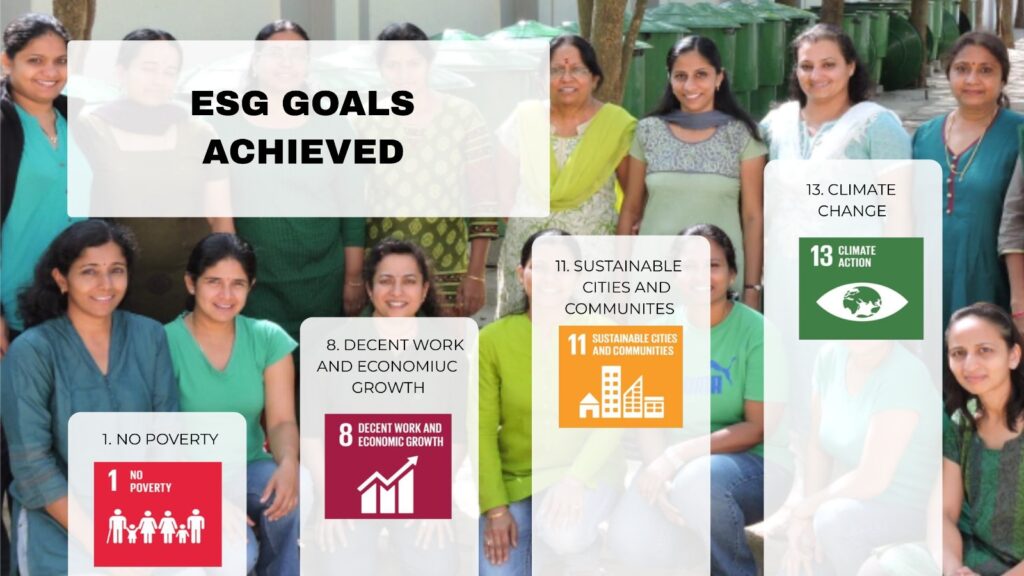
The business presentation also references alignment with multiple United Nations Sustainable Development Goals (SDGs), including:
- No Poverty
- Decent Work and Economic Growth
- Sustainable Cities and Communities
- Climate Action
Research-Driven Innovation
Kenterra positions itself as a research-oriented organization focused on continuous product development.
Its portfolio includes:
- Composting inoculums
- Dewatering systems
- Bulk composting equipment
- Liquid fertilizer processing
- Organic waste recycling technologies
- Soil-less planting media
The company’s stated focus is to continuously improve waste management technologies that make biodegradable waste economically valuable rather than environmentally burdensome.
Partnerships and Industry Presence
The presentation showcases collaborations and engagements with organizations across the public and private sectors, including metro systems, real estate developers, foundations, and government-linked institutions. These partnerships reflect Kenterra’s work across residential, institutional, and urban infrastructure projects. The company also participates in startup and sustainability ecosystems such as Brigade REAP.
Recognition
The presentation highlights several recognitions, including:
- Swachh Award (2023) for compost upcycling
- Tally MSME Award (2024) recognizing sustainability
- Media coverage highlighting compost-based urban landscaping initiatives
These recognitions illustrate growing visibility for Kenterra’s approach to sustainable waste management.
Looking Ahead
As cities continue to urbanize and environmental regulations become more stringent, decentralized waste management will become increasingly important. Kenterra’s integrated model—combining waste processing equipment, biological innovations, composting systems, liquid fertilizer production, and urban landscaping solutions—demonstrates how biodegradable waste can be transformed into valuable environmental and economic resources.
By converting waste into compost, fertilizer, planting media, and other useful outputs, Kenterra promotes a circular approach where organic waste is not discarded but reintegrated into productive use. This aligns with its overarching vision of making waste management a value-generating activity while contributing to cleaner cities and more sustainable communities.